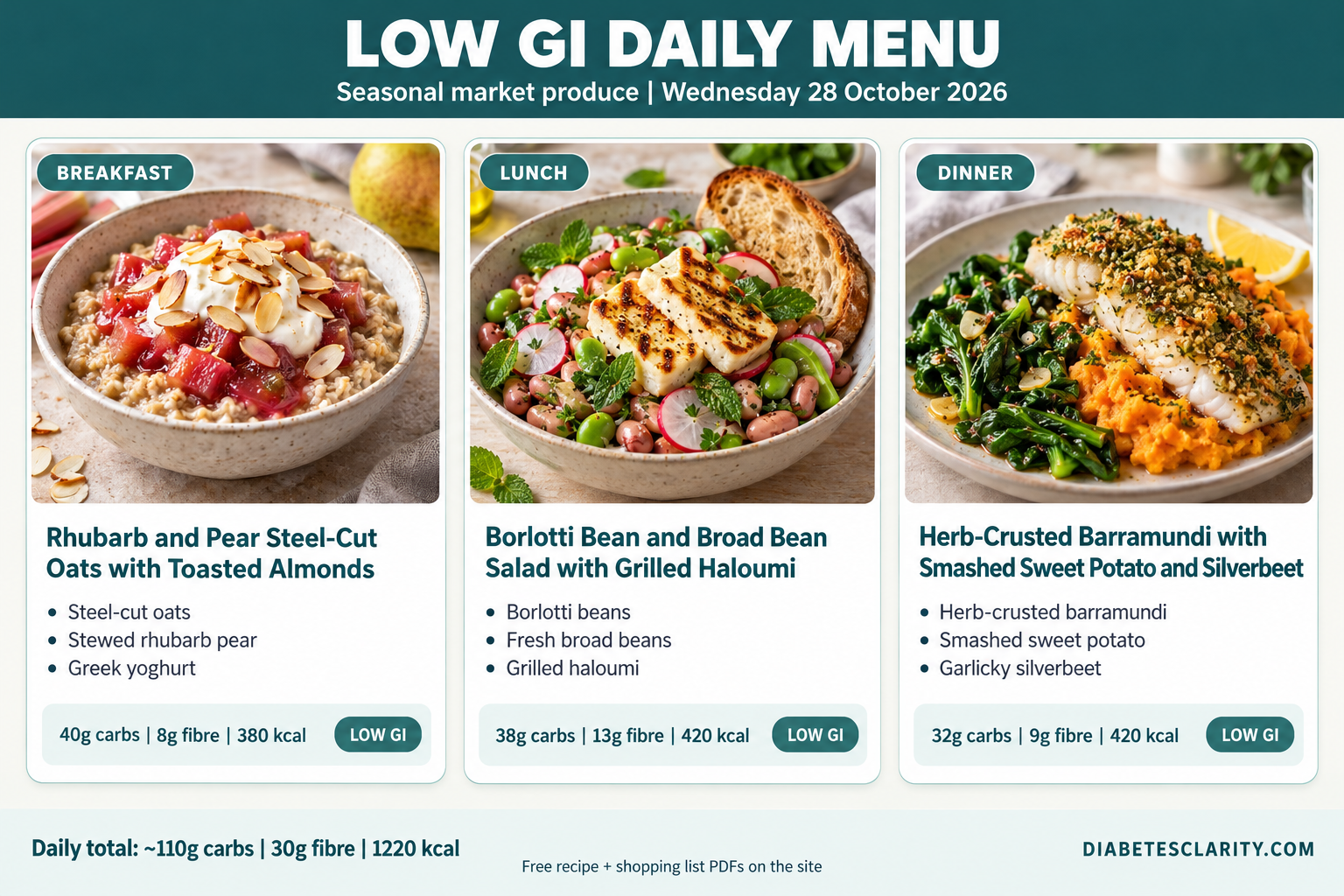
Low GI Daily Menu: Spring Market Produce Day
Spring markets are overflowing with rhubarb, broad beans, silverbeet and new-season sweet potato right now, so today’s menu celebrates the lot. Each meal balances slow-release carbs with lean protein, fibre and good fats to help keep energy and blood glucose levels steadier through the day.
Free downloads for today’s menu
⬇ Recipes & method (PDF)
⬇ Shopping list (PDF)✉ Email me this menu
Today at a glance
- Breakfast: Rhubarb and Pear Steel-Cut Oats with Toasted Almonds
- Lunch: Borlotti Bean and Broad Bean Salad with Grilled Haloumi
- Dinner: Herb-Crusted Barramundi with Smashed Sweet Potato and Silverbeet
Daily total per person (approx.): 110 g carbs · 30 g fibre · 79 g protein · 1220 kcal
Breakfast · Low GI
Rhubarb and Pear Steel-Cut Oats with Toasted Almonds
Creamy steel-cut oats topped with cinnamon-stewed rhubarb and pear, Greek yoghurt and toasted almonds.
Prep 10 min | Cook 15 min | Serves 2
Per serve: 40 g carbs · 8 g fibre · 17 g protein · 380 kcal
Ingredients
- 135 g (3/4 cup) steel-cut oats
- 500 ml reduced-fat milk (or half milk, half water)
- 2 stalks rhubarb, chopped
- 1 small pear, diced
- 1 tsp ground cinnamon
- 140 g (1/2 cup) unsweetened Greek yoghurt
- 2 tbsp flaked almonds, toasted
Method
- Place rhubarb, pear, cinnamon and a splash of water in a small saucepan and simmer gently for 8-10 minutes, stirring occasionally, until soft and jammy.
- Meanwhile, bring milk (and water if using) to a gentle simmer in another saucepan and stir in the oats.
- Cook, stirring often, for 10-12 minutes until creamy and tender.
- Divide oats between two bowls and top with the warm rhubarb and pear compote.
- Finish with a dollop of yoghurt and a scattering of toasted almonds.
Why it’s low GI: Steel-cut oats and low GI pear release glucose slowly, while rhubarb adds fibre and tang without added sugar, and yoghurt and almonds add protein and healthy fat to further flatten the glucose response.
Tip: Stew a double batch of rhubarb and pear and keep in the fridge for 4 days to speed up weekday breakfasts.
Drink: Freshly brewed black coffee or tea, unsweetened
Lunch · Low GI
Borlotti Bean and Broad Bean Salad with Grilled Haloumi
A fresh spring salad of borlotti beans, broad beans, radish and mint topped with golden grilled haloumi and sourdough.
Prep 15 min | Cook 10 min | Serves 2
Per serve: 38 g carbs · 13 g fibre · 24 g protein · 420 kcal
Ingredients
- 400 g tin borlotti beans, drained and rinsed
- 150 g frozen broad beans, blanched and peeled
- 4 radishes, thinly sliced
- 60 g baby rocket
- small handful fresh mint, chopped
- 1 lemon, zested and juiced
- 2 tsp olive oil
- 100 g haloumi, sliced
- 2 slices grainy sourdough bread
Method
- Blanch broad beans in boiling water for 2 minutes, drain, then slip off outer skins.
- Combine borlotti beans, broad beans, radish, rocket and mint in a large bowl.
- Whisk lemon juice, zest and olive oil, then toss through the salad.
- Heat a non-stick pan over medium-high heat and grill haloumi slices for 1-2 minutes each side until golden.
- Toast the sourdough and serve alongside the salad topped with warm haloumi.
Why it’s low GI: Borlotti beans and broad beans are low GI legumes that digest slowly and add plenty of fibre, while grainy sourdough provides a modest, steady carb boost alongside protein and calcium from the haloumi.
Tip: Swap sourdough for a wholegrain wrap if you prefer to eat the salad on the go.
Drink: Sparkling water with mint leaves and lemon slices
Dinner · Low GI
Herb-Crusted Barramundi with Smashed Sweet Potato and Silverbeet
Pan-seared barramundi with a lemon and herb crust, served with creamy smashed sweet potato and garlicky silverbeet and zucchini.
Prep 15 min | Cook 20 min | Serves 2
Per serve: 32 g carbs · 9 g fibre · 38 g protein · 420 kcal
Ingredients
- 2 x 150 g barramundi fillets (or other firm white fish)
- 1 lemon, zested, plus wedges to serve
- 2 cloves garlic, crushed
- small bunch fresh parsley, chopped
- 400 g sweet potato, peeled and chopped
- 1 bunch (about 200 g) silverbeet, stems removed, shredded
- 2 zucchini, sliced
- 2 tsp olive oil
- to taste cracked black pepper
Method
- Steam or boil sweet potato chunks for 12-15 minutes until tender, then drain and mash with 1 teaspoon olive oil and black pepper.
- Press lemon zest, half the garlic and half the parsley onto the fish fillets.
- Heat remaining olive oil in a pan and cook fish for 3-4 minutes each side until just cooked through.
- In the same pan, sauté remaining garlic, zucchini and silverbeet for 3-4 minutes until just wilted.
- Serve fish with smashed sweet potato and greens, scattered with remaining parsley and a lemon wedge.
Why it’s low GI: Sweet potato in a moderate portion offers a lower GI alternative to white potato, while the fibre-rich silverbeet and zucchini and the lean fish protein help slow overall digestion and glucose release.
Tip: Any firm white fish, such as snapper or basa, works well if barramundi isn’t available.
Drink: Chamomile tea or still water with a slice of lemon
Why this menu helps keep glucose steadier
Each meal today pairs a low GI carbohydrate source, such as steel-cut oats, legumes, sourdough and sweet potato, with lean protein and healthy fats, which slows digestion and helps avoid sharp blood glucose spikes. Generous servings of seasonal vegetables and fruit add fibre that further smooths glucose absorption. Keeping portions and carb amounts consistent across breakfast, lunch and dinner supports steadier energy levels throughout the day, and all drinks are free from added sugar.
Free downloads for today’s menu
⬇ Recipes & method (PDF)
⬇ Shopping list (PDF)✉ Email me this menu
Want a plan made just for you?
Pick your meals, cuisine, dietary needs and number of days, and we’ll email you a personalised low GI plan with recipes and a shopping list.