Low GI Daily Menu: Japanese-Inspired Spring Flavours
Celebrate spring with a gentle Japanese-inspired menu built on umami miso, buckwheat soba and wholegrain barley. Each meal keeps carbs moderate and fibre high, so you get plenty of flavour without the blood glucose rollercoaster.
Free downloads for today’s menu
⬇ Recipes & method (PDF)
⬇ Shopping list (PDF)✉ Email me this menu
Today at a glance
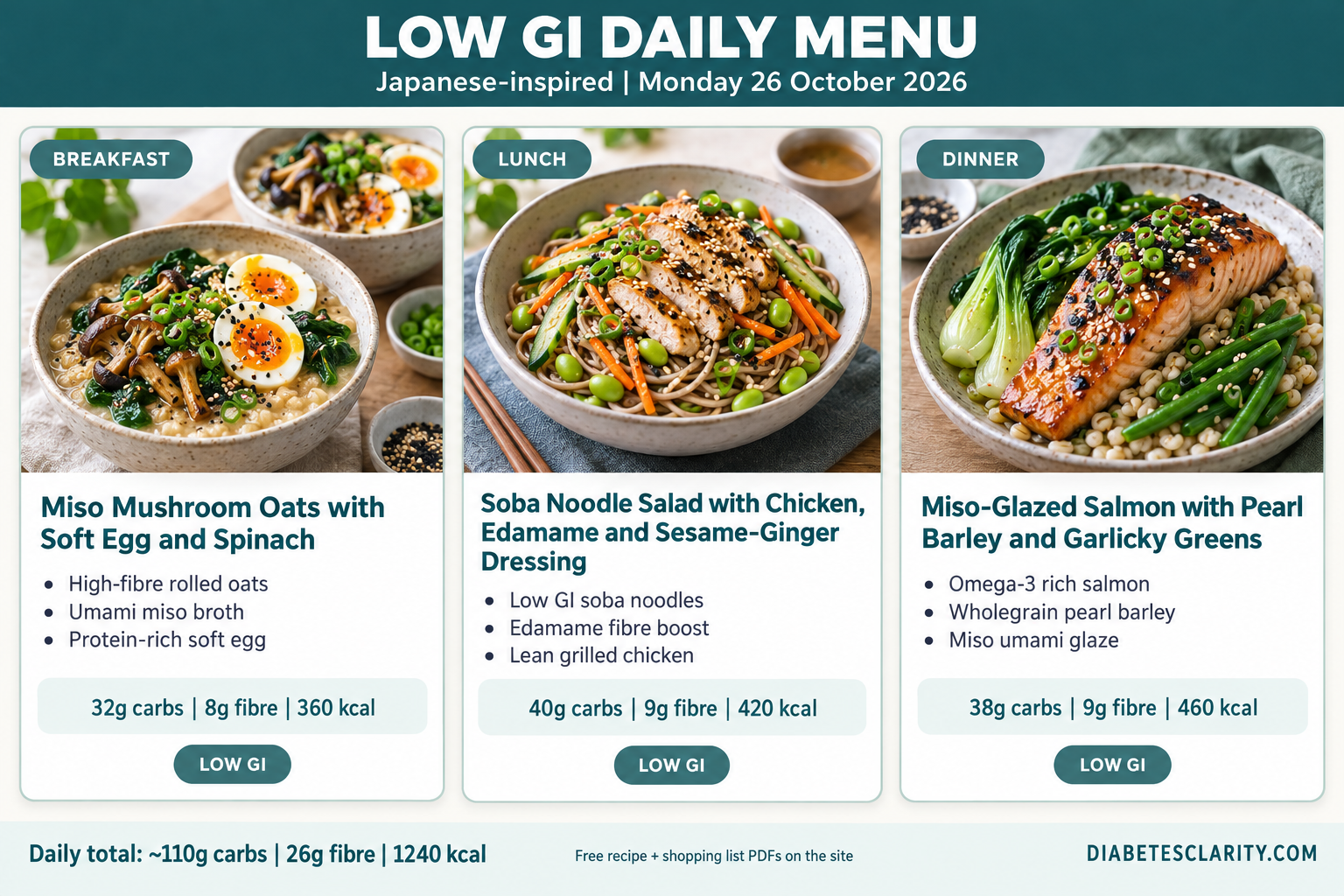
- Breakfast: Miso Mushroom Oats with Soft Egg and Spinach
- Lunch: Soba Noodle Salad with Chicken, Edamame and Sesame-Ginger Dressing
- Dinner: Miso-Glazed Salmon with Pearl Barley and Garlicky Greens
Daily total per person (approx.): 110 g carbs · 26 g fibre · 90 g protein · 1240 kcal
Breakfast · Low GI
Miso Mushroom Oats with Soft Egg and Spinach
Creamy rolled oats simmered in a light dashi-miso broth and topped with sautéed mushrooms, wilted spinach and a jammy soft-boiled egg.
Prep 10 min | Cook 12 min | Serves 2
Per serve: 32 g carbs · 8 g fibre · 19 g protein · 360 kcal
Ingredients
- 1 cup (90 g) traditional rolled oats
- 2 cups (500 ml) water
- 1 tsp dashi powder
- 1 tbsp white miso paste
- 150 g mixed mushrooms (shiitake and button), sliced
- 2 eggs
- 60 g baby spinach
- 2 spring onions, thinly sliced
- 1 tsp sesame oil
- 1 tbsp toasted sesame seeds
Method
- Bring water and dashi powder to a simmer, stir in oats and cook 6-7 minutes until creamy, then remove from heat and stir through miso.
- Meanwhile, soft-boil eggs for 6 minutes, cool in cold water, then peel and halve.
- Heat sesame oil in a pan, sauté mushrooms until golden, add spinach and wilt for 1 minute.
- Divide miso oats between bowls and top with the mushroom-spinach mixture and egg halves.
- Scatter with spring onion and sesame seeds to serve.
Why it’s low GI: Traditional rolled oats and miso give a slow, steady release of carbohydrate, while mushrooms, spinach and egg add fibre and protein to flatten the blood glucose response.
Tip: Make a double batch of plain miso oats and keep toppings fresh each morning so the oats don’t go soggy.
Drink: Steaming green tea, unsweetened
Lunch · Low GI
Soba Noodle Salad with Chicken, Edamame and Sesame-Ginger Dressing
Chilled buckwheat soba tossed with edamame, crunchy vegetables and grilled chicken in a zesty sesame-ginger dressing.
Prep 15 min | Cook 12 min | Serves 2
Per serve: 40 g carbs · 9 g fibre · 35 g protein · 420 kcal
Ingredients
- 100 g soba (buckwheat) noodles
- 200 g chicken breast, sliced
- 150 g frozen edamame, shelled, blanched
- 1 Lebanese cucumber, julienned
- 1 carrot, julienned
- 2 spring onions, sliced
- 2 tbsp rice vinegar
- 1 tbsp tamari (reduced-salt soy sauce)
- 1 tsp sesame oil
- 1 tsp grated fresh ginger
Method
- Cook soba noodles in boiling water for 4-5 minutes, then drain and rinse under cold water until cool.
- Season chicken with pepper and pan-fry in a little sesame oil for 4-5 minutes each side until cooked; rest, then slice.
- Whisk rice vinegar, tamari, sesame oil and ginger to make the dressing.
- Toss noodles with edamame, cucumber, carrot, spring onion and dressing.
- Top with sliced chicken and sesame seeds to serve.
Why it’s low GI: Buckwheat soba has a lower GI than regular wheat noodles, and edamame plus vegetables add fibre and protein to slow digestion.
Tip: Pack the dressing separately if taking this to work so the noodles stay springy, not soggy.
Drink: Sparkling water with lime wedges
Dinner · Low GI
Miso-Glazed Salmon with Pearl Barley and Garlicky Greens
Oven-grilled salmon brushed with a light miso glaze, served over nutty pearl barley with steamed bok choy and beans.
Prep 10 min | Cook 30 min | Serves 2
Per serve: 38 g carbs · 9 g fibre · 36 g protein · 460 kcal
Ingredients
- 2 x 150 g salmon fillets, skin on
- 1 tbsp white miso paste
- 1 tsp tamari (reduced-salt soy sauce)
- 1 tsp rice vinegar
- 1 tsp sesame oil
- 100 g pearl barley (dry)
- 200 g bok choy, halved lengthways
- 100 g green beans, trimmed
- 1 garlic clove, thinly sliced
- 1 tsp sesame seeds
Method
- Cook pearl barley according to packet directions, about 25-30 minutes, until tender, then drain.
- Whisk miso, tamari, rice vinegar and sesame oil, brush over salmon and rest for 10 minutes.
- Grill or bake salmon at 200°C for 10-12 minutes until just cooked through.
- Steam bok choy and green beans for 3-4 minutes until tender-crisp, then toss with garlic in a hot dry pan for 30 seconds.
- Serve salmon over barley with the greens, scattered with sesame seeds and spring onion.
Why it’s low GI: Pearl barley is a low GI wholegrain that digests slowly, while omega-3-rich salmon and fibrous greens help keep this meal gentle on blood glucose.
Tip: Cook extra barley and freeze in portions for a quick low GI side on busy nights.
Drink: Chilled green tea with a slice of lemon
Why this menu helps keep glucose steadier
Each meal pairs a slow-release low GI carbohydrate, such as rolled oats, buckwheat soba or pearl barley, with lean protein from eggs, chicken or salmon. Fibre from vegetables, edamame and wholegrains slows digestion and softens blood glucose spikes, while healthy fats from sesame oil and salmon support steady energy. Keeping carb portions moderate and consistent across the day, paired with zero-sugar drinks, helps maintain more stable glucose levels without sacrificing flavour.
Free downloads for today’s menu
⬇ Recipes & method (PDF)
⬇ Shopping list (PDF)✉ Email me this menu
Want a plan made just for you?
Pick your meals, cuisine, dietary needs and number of days, and we’ll email you a personalised low GI plan with recipes and a shopping list.