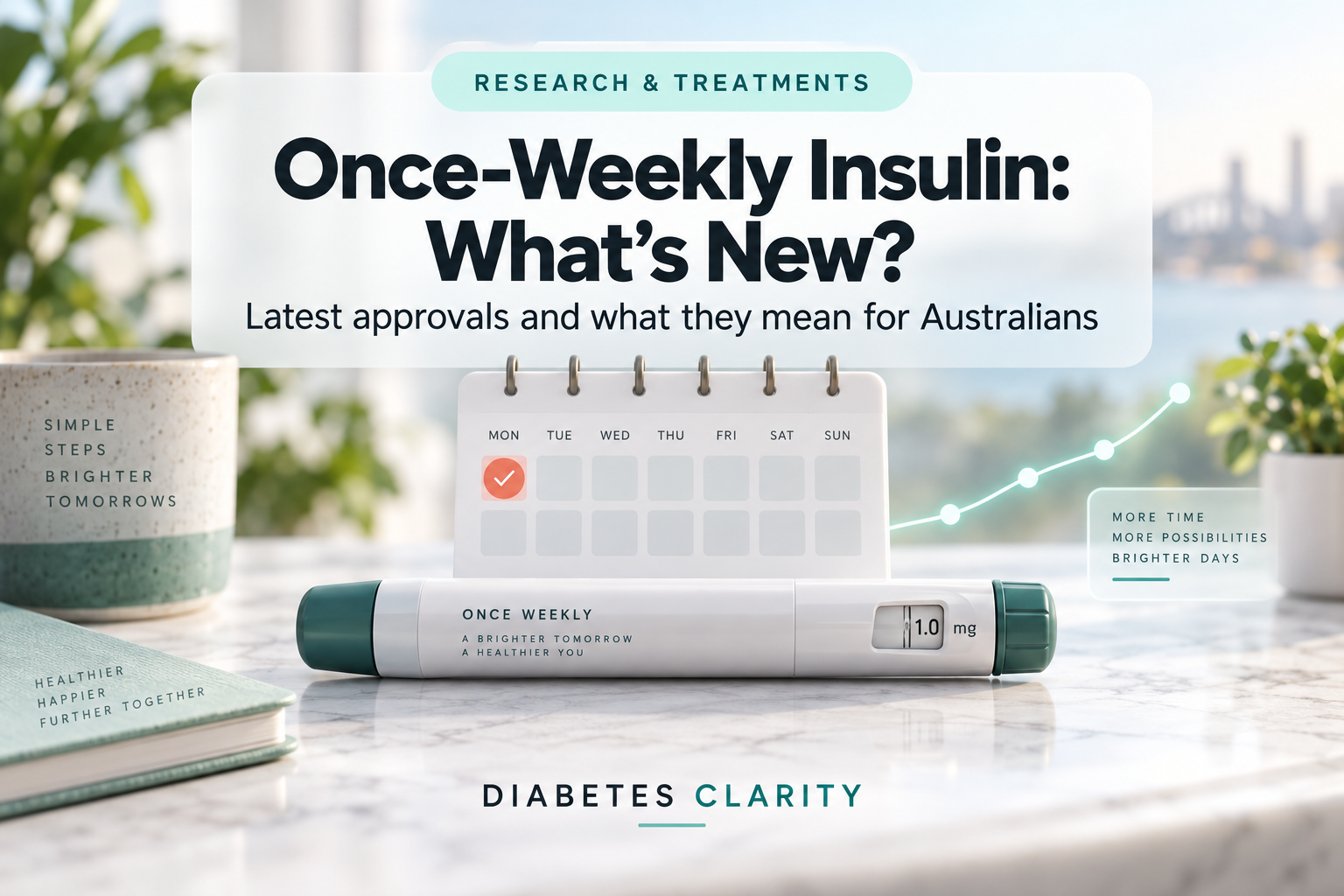
Once-Weekly Insulin: What’s New for People With Diabetes
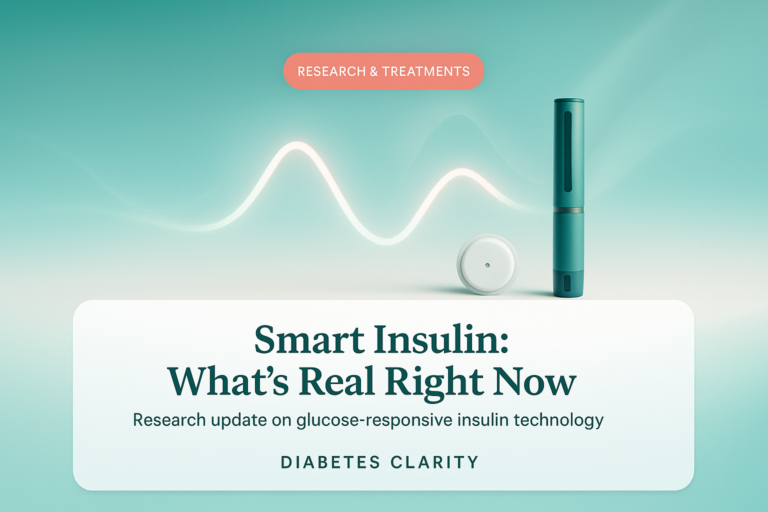
For decades, insulin has meant daily injections. That’s starting to change. In 2026, two different once-weekly basal insulins have gained approval overseas for type 2 diabetes, and the evidence is becoming clearer about who they suit — and who they don’t.
The short version
- Two weekly insulins — insulin icodec (brand name Awiqli) and insulin efsitora alfa (brand name Onswik) — have been approved in the US, UK and Europe during 2026 for adults with type 2 diabetes.
- In October 2026, the US regulator also approved icodec for children aged 10 and over with type 2 diabetes — a world first for a weekly insulin in that age group.
- Trial results in type 1 diabetes show weekly insulin works, but with more hypoglycaemia (low blood glucose) than daily insulin, so it is not currently approved for type 1.
- As of late October 2026, neither product has confirmed approval or PBS (Pharmaceutical Benefits Scheme) subsidy in Australia, though early regulatory paperwork is in progress.
What’s actually new
Basal insulin is the “background” insulin that keeps blood glucose steady between meals and overnight, usually injected once or twice a day. Weekly insulins aim to replace that daily jab with a single injection every seven days.
The first of these, insulin icodec (Awiqli), was approved in the United States in March 2026 for adults with type 2 diabetes and became available there in August. In October 2026, that approval was extended to children aged 10 and older with type 2 diabetes — a significant step, since type 2 diabetes in young people is rising and daily injections can be a real barrier to treatment.
A second weekly insulin, efsitora alfa (Onswik), followed with US approval in September 2026. The UK’s medicines regulator, the MHRA, authorised it on 13 October 2026, and the UK’s National Institute for Health and Care Excellence (NICE) has recommended it for NHS use, with rollout expected in Wales later in 2026 and in England in early 2027.
The two insulins work a little differently under the hood. Icodec has a half-life (the time it takes the body to clear half the dose) of around seven days, matching its weekly dosing neatly. Efsitora’s half-life is longer, around 17 days, which means some switching protocols use a larger one-off starting dose to reach steady levels sooner.
What the evidence shows
Across several large trials (known as the ONWARDS and QWINT programs), both weekly insulins were compared against standard daily basal insulins in people with type 2 diabetes. The results were reassuring: weekly insulin lowered HbA1c (a blood test showing average blood glucose over about three months) by a similar amount to daily insulin, and in some trials improved time in range — the proportion of the day blood glucose stays within a healthy target band.
The picture is more complicated for type 1 diabetes. In the ONWARDS 6 trial, icodec was compared with daily insulin degludec in people with type 1 diabetes. HbA1c improvements were similar after 26 weeks, though slightly less so by 52 weeks. More concerning, participants on weekly icodec had noticeably more clinically significant or severe hypoglycaemia events than those on daily insulin. This is likely why weekly insulins so far have only been approved for type 2 diabetes, not type 1.
Who this affects
- Type 2 diabetes: This is where weekly insulin is making the most difference right now, particularly for people who find daily injections hard to fit into their routine, or who manage multiple medicines and conditions.
- Children and teens with type 2 diabetes: The October 2026 approval in the US for ages 10+ opens a new option for younger people, though uptake and local approvals elsewhere will take time.
- Type 1 diabetes: Not currently a target for these products, given the hypoglycaemia signal in trials. People with type 1 diabetes should continue with their current insulin regimen unless their endocrinologist advises otherwise.
- Gestational diabetes and prediabetes: These weekly insulins are not relevant to gestational diabetes management or prediabetes, which generally don’t involve insulin injections at this stage.
Availability and cost in Australia
This is the part many Australian readers want to know, and honestly, the answer is “not yet confirmed.” The Therapeutic Goods Administration (TGA) does list Awiqli (insulin icodec) in its annual charge exemption records, which suggests some regulatory process is underway. However, there is no confirmed TGA marketing approval or PBS listing for either icodec or efsitora as of late October 2026. That means neither medicine is currently available for prescription or subsidised supply in Australia. Timelines for new medicines reaching Australian pharmacies, after overseas approval, commonly run from several months to a few years.
What we still don’t know
- Long-term safety data beyond one to two years isn’t yet available for either weekly insulin.
- How weekly insulin performs in people using insulin pumps or continuous glucose monitors (CGMs) alongside other diabetes medicines needs more real-world data.
- Whether future, refined versions might reduce the hypoglycaemia risk seen in type 1 diabetes trials remains an open research question.
What this means for you
- If you have type 2 diabetes and currently use daily basal insulin, there’s no need to change anything right now — these options aren’t yet available in Australia.
- When they do arrive, ask your GP, endocrinologist or credentialled diabetes educator whether a weekly insulin could suit your situation, your routine and your monitoring setup.
- If you have type 1 diabetes, current evidence doesn’t support switching to weekly insulin, so keep following your existing treatment plan.
- Keep an eye on updates from Diabetes Australia and the TGA for confirmed Australian availability and PBS status.
- Never start, stop or switch insulin without guidance from your healthcare team.
Weekly insulin is one of the more exciting developments in diabetes care this year, and it’s a reminder that treatment options keep evolving. For more on living well with diabetes day to day, explore our guides, recipes and daily menu ideas elsewhere on Diabetes Clarity.
📖 Sources:
• PRNewswire / Novo Nordisk – FDA approval of Awiqli (icodec) for children 10+ with type 2 diabetes – October 2026
• Healio – FDA approves Awiqli as once-weekly basal insulin for children with type 2 diabetes – October 2026
• GOV.UK (MHRA) – Authorisation of Onswik (insulin efsitora alfa) for adults with type 2 diabetes – October 2026
• Diabetes UK – NICE approval of weekly insulin injection for NHS use in type 2 adults – 2026
• Springer/Diabetologia – ONWARDS 6 trial data on insulin icodec in type 1 diabetes – 2026
• GPnotebook – QWINT trial summaries for insulin efsitora alfa in type 2 diabetes – 2026
• TGA (Therapeutic Goods Administration) – Annual charge exemption listings for Awiqli (insulin icodec) – 2025-26