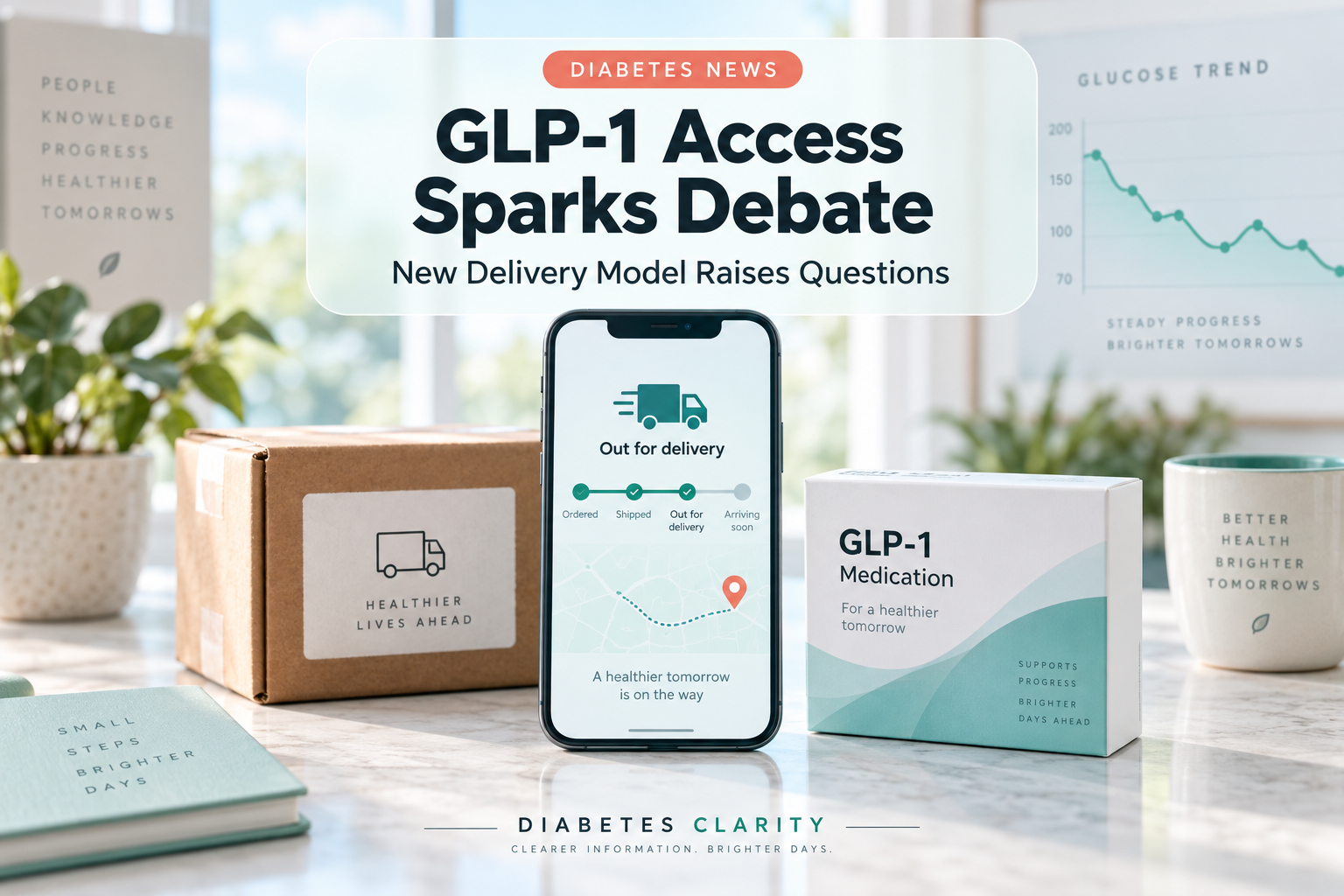
GLP-1 Access in Australia: New Delivery Model Sparks Debate
A new home-delivery service for Mounjaro has just launched in Australia, and it’s reignited the national conversation about who can get GLP-1 medicines, how, and at what cost.
GLP-1 stands for glucagon-like peptide-1, a gut hormone that helps control blood glucose (sugar) and appetite. Medicines that mimic this hormone — like semaglutide and tirzepatide — are used to manage type 2 diabetes and, in some forms, chronic weight management.
The short version
- Eli Lilly has launched LillyDirect, a service that lets people with a doctor’s e-script get Mounjaro (tirzepatide) delivered to their door through an online pharmacy.
- Doctors’ groups and pharmacy bodies have raised concerns about this model, particularly around continuity of care.
- Mounjaro and Wegovy remain private prescriptions in Australia — neither is subsidised by the PBS (Pharmaceutical Benefits Scheme) for weight loss, and Wegovy’s proposed restricted listing still hasn’t started.
- Ozempic and Trulicity remain PBS-subsidised, but only for people with type 2 diabetes who meet specific authority criteria — not for weight loss alone.
What’s new: home delivery for Mounjaro
In early October 2026, Eli Lilly rolled out LillyDirect in Australia. The company says it doesn’t prescribe or dispense medicine itself — instead, a person’s e-script is reviewed by a licensed Australian online pharmacy, which dispenses the Mounjaro and arranges delivery, along with pharmacist counselling.
For people who’ve struggled to find Mounjaro on pharmacy shelves, this sounds like welcome relief. Some early users have reported modest savings compared with buying through a regular pharmacy.
Why there’s backlash
The RACGP (Royal Australian College of General Practitioners), the Pharmacy Guild of Australia and the Pharmaceutical Society of Australia have all voiced concerns about this model. Their worry isn’t that it’s unlawful — it isn’t — but that routing prescriptions through an online pharmacy, rather than the pharmacy that knows a patient’s full history, could weaken continuity of care for a medicine that carries real risks and needs careful monitoring.
It’s a reminder that how you access a medicine matters almost as much as whether you can access it at all. If you’re considering any online pharmacy service, it’s worth asking your GP or regular pharmacist whether they can still see your full medication record and flag any interactions or side effects.
Who this affects
- Type 2 diabetes: Ozempic and Trulicity remain available on the PBS for eligible people, meaning the co-payment price applies rather than the full private cost. This is the group with the clearest subsidised access.
- People seeking weight management: Wegovy and Mounjaro are TGA-registered (Therapeutic Goods Administration-approved) for chronic weight management, but only available privately. Reports suggest Mounjaro can cost up to around $700 a month without a subsidy.
- Type 1 diabetes, gestational diabetes, prediabetes: GLP-1 medicines are not currently approved or subsidised for these groups in Australia. If you have questions about whether a GLP-1 medicine could ever be appropriate for your situation, that conversation belongs with your endocrinologist or diabetes educator — never a self-directed decision.
Where things stand with the PBS
The PBAC (Pharmaceutical Benefits Advisory Committee) recommended a restricted PBS listing for Wegovy for adults with obesity and established cardiovascular disease, and the Health Minister reportedly endorsed this in January 2026. But as of late October 2026, pricing and risk-sharing negotiations between the government and the manufacturer had not been finalised, so the listing hasn’t actually started.
Separately, Eli Lilly chose not to proceed with a proposed PBS listing for Mounjaro for type 2 diabetes in April 2026. That means, for now, Mounjaro stays a private-prescription-only medicine in Australia, regardless of whether it’s used for diabetes or weight management.
What we still don’t know
- Exactly when (or if) Wegovy’s restricted PBS listing will commence.
- Whether LillyDirect-style delivery models will expand to other GLP-1 medicines or face regulatory changes.
- How ongoing high demand will affect local pharmacy stock levels over the coming months, even though Ozempic was removed from the TGA’s official shortage list in mid-2025.
One thing that is settled: compounded (custom-mixed) versions of GLP-1 medicines are not a lawful alternative. Australian pharmacists have been banned from compounding GLP-1 receptor agonist analogues since October 2024, so any product marketed this way should be treated with real caution.
What this means for you
- If you’re on Ozempic or Trulicity for type 2 diabetes, check with your pharmacy about current stock and ask your GP about backup plans if your usual brand is temporarily unavailable.
- If you’re considering Mounjaro or Wegovy, have an honest conversation with your GP about the ongoing cost, since neither is PBS-subsidised for weight loss.
- Before using any online delivery or telehealth prescribing service, ask whether your regular GP and pharmacist will still have visibility of your full medical history.
- Never buy compounded or unregistered GLP-1 products online — stick to TGA-registered medicines dispensed by a real pharmacist.
- If cost is a barrier, ask your GP or a credentialled diabetes educator about all currently subsidised options and realistic timeframes for any pending PBS changes.
A fast-moving space
The GLP-1 landscape in Australia keeps shifting — new delivery models, pending PBS decisions, and ongoing demand all playing out at once. For practical ways to manage diabetes day to day while policy catches up, explore our daily menus, recipes and guides elsewhere on Diabetes Clarity.
📖 Sources:
• ABC News – Backlash over Eli Lilly’s Mounjaro home delivery model (LillyDirect) – October 2026
• ABC Health Report – Legal and clinical questions on new weight-loss prescription models – October 2026
• PharmaDispatch – GLP-1 medicines reshaping the Australian prescription market, PBS and pricing status – October 2026
• Croakey Health Media – Health policy roundup including GLP-1 distribution concerns – October 2026
• Australian Prescriber (NPS MedicineWise/Therapeutic Guidelines) – GLP-1 receptor agonist safety information – 2026