Low GI Daily Menu: Air Fryer Quick Spring Recipes
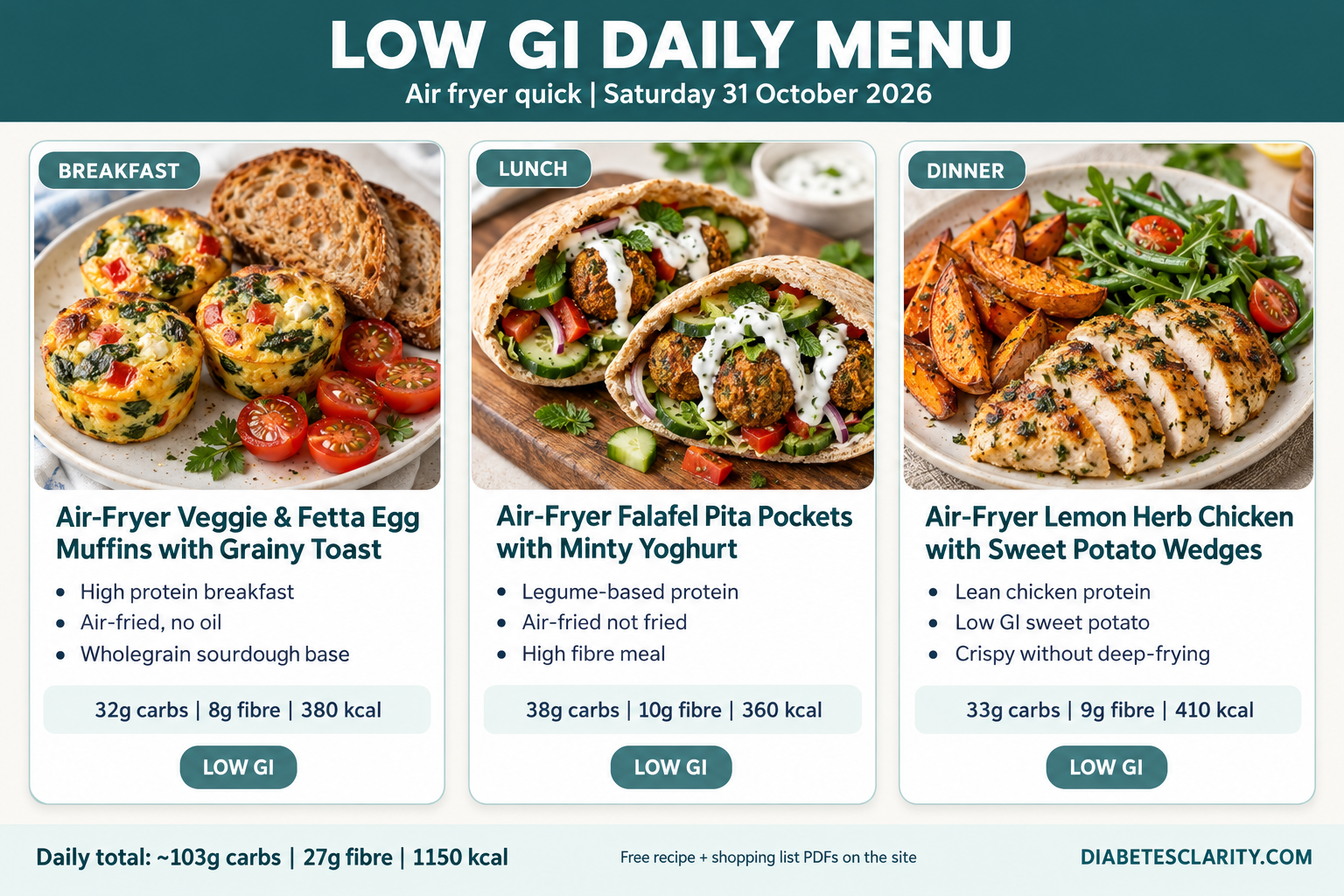
Make the most of your air fryer this weekend with a trio of quick, low GI meals that need minimal washing up. Today’s spring menu leans on legumes, wholegrain carbs and plenty of vegetables, with crispy textures from the air fryer instead of deep-frying. It’s a simple, family-friendly day of eating that keeps blood glucose steadier without sacrificing flavour.
Free downloads for today’s menu
⬇ Recipes & method (PDF)
⬇ Shopping list (PDF)✉ Email me this menu
Today at a glance
- Breakfast: Air-Fryer Veggie & Fetta Egg Muffins with Grainy Toast
- Lunch: Air-Fryer Falafel Pita Pockets with Minty Yoghurt
- Dinner: Air-Fryer Lemon Herb Chicken with Sweet Potato Wedges
Daily total per person (approx.): 103 g carbs · 27 g fibre · 77 g protein · 1150 kcal
Breakfast · Low GI
Air-Fryer Veggie & Fetta Egg Muffins with Grainy Toast
Fluffy egg muffins packed with spinach, capsicum and fetta, air-fried in minutes and served with wholegrain sourdough.
Prep 10 min | Cook 12 min | Serves 2
Per serve: 32 g carbs · 8 g fibre · 24 g protein · 380 kcal
Ingredients
- 6 eggs
- 60 g baby spinach, roughly chopped
- 100 g cherry tomatoes, halved
- 1 small capsicum, finely diced
- 60 g fetta, crumbled
- 2 spring onions, sliced
- 4 slices wholegrain sourdough bread
- to taste black pepper
Method
- Preheat air fryer to 180°C. Lightly spray 6 silicone muffin cups or small ramekins with olive oil.
- Whisk eggs in a bowl, then stir through spinach, half the tomatoes, capsicum, spring onion and fetta.
- Divide mixture between cups and air fry for 10-12 minutes until just set and lightly golden.
- Toast sourdough while muffins cook.
- Serve muffins with toast and remaining cherry tomatoes, seasoned with black pepper.
Why it’s low GI: Eggs and vegetables have minimal impact on blood glucose, while wholegrain sourdough provides slow-release low GI carbohydrate to balance the meal.
Tip: Muffins keep well in the fridge for 3 days, so double the batch for easy weekday breakfasts.
Drink: Black coffee or English breakfast tea
Lunch · Low GI
Air-Fryer Falafel Pita Pockets with Minty Yoghurt
Crispy chickpea falafel air-fried until golden, tucked into wholemeal pita with crunchy salad and a cooling yoghurt-mint sauce.
Prep 15 min | Cook 14 min | Serves 2
Per serve: 38 g carbs · 10 g fibre · 18 g protein · 360 kcal
Ingredients
- 400 g can chickpeas, drained and rinsed
- 2 spring onions, roughly chopped
- 2 cloves garlic, crushed
- 1 small handful parsley, chopped
- 1 tsp ground cumin
- 1 tsp ground coriander
- 2 wholemeal pita breads
- 150 g Greek yoghurt, unsweetened
- 1 small handful mint leaves, chopped
- 1 lemon
- 1 Lebanese cucumber, diced
- 1 tomato, diced
- 60 g baby spinach or salad leaves
Method
- In a food processor, pulse chickpeas, spring onion, garlic, parsley, cumin and coriander until coarse but holding together.
- Shape mixture into 8 small patties and lightly spray with olive oil.
- Air fry at 180°C for 12-14 minutes, turning halfway, until golden and crisp.
- Meanwhile, mix yoghurt with mint and a squeeze of lemon juice for the sauce.
- Warm pita breads briefly, then fill with salad leaves, cucumber, tomato, falafel and yoghurt sauce.
Why it’s low GI: Chickpeas are a low GI legume high in fibre and plant protein, and wholemeal pita adds slow-release carbohydrate instead of refined white bread.
Tip: Leftover falafel freezes well before cooking; air fry straight from frozen, adding a few extra minutes.
Drink: Sparkling water with lemon and mint
Dinner · Low GI
Air-Fryer Lemon Herb Chicken with Sweet Potato Wedges
Juicy lemon and rosemary chicken breast with crispy air-fried sweet potato wedges and a fresh green bean and rocket salad.
Prep 15 min | Cook 20 min | Serves 2
Per serve: 33 g carbs · 9 g fibre · 35 g protein · 410 kcal
Ingredients
- 300 g (2 breasts) chicken breast
- 400 g sweet potato, cut into wedges
- 200 g green beans, trimmed
- 100 g cherry tomatoes, halved
- 60 g rocket
- 2 tbsp olive oil
- 1 lemon
- 1 clove garlic, crushed
- 1 tsp dried rosemary
Method
- Preheat air fryer to 180°C. Toss sweet potato wedges with 1 tablespoon olive oil and air fry for 15 minutes, shaking basket halfway.
- Meanwhile, rub chicken with remaining oil, garlic, rosemary, lemon zest and a squeeze of juice.
- Push wedges aside, add chicken to the basket and air fry a further 10-12 minutes until cooked through and wedges are golden.
- Blanch or steam green beans for 2-3 minutes until bright green and just tender.
- Toss beans with rocket, cherry tomatoes and a squeeze of lemon juice; serve alongside sliced chicken and wedges.
Why it’s low GI: Sweet potato eaten in a moderate portion has a lower GI than regular potato, and pairing it with lean chicken and non-starchy green beans keeps the overall meal’s carbohydrate load moderate.
Tip: Slice leftover chicken for tomorrow’s salad or sandwich to save time during the week.
Drink: Sparkling water with a wedge of lemon
Why this menu helps keep glucose steadier
Each meal pairs a low GI carbohydrate source, like wholegrain sourdough, chickpeas or sweet potato, with lean protein, healthy fats and plenty of non-starchy vegetables, which slows digestion and helps blunt blood glucose spikes. Using the air fryer keeps added fat low while still giving satisfying crisp textures, so meals feel indulgent without extra saturated fat. Consistent carbohydrate portions across the day, roughly 30-40 g per meal, support steadier glucose levels compared with large or uneven serves. Fibre from legumes, vegetables and wholegrains also slows glucose absorption and supports fullness between meals.
Free downloads for today’s menu
⬇ Recipes & method (PDF)
⬇ Shopping list (PDF)✉ Email me this menu
Want a plan made just for you?
Pick your meals, cuisine, dietary needs and number of days, and we’ll email you a personalised low GI plan with recipes and a shopping list.