Automated Insulin Delivery: What’s New for Type 2 Diabetes
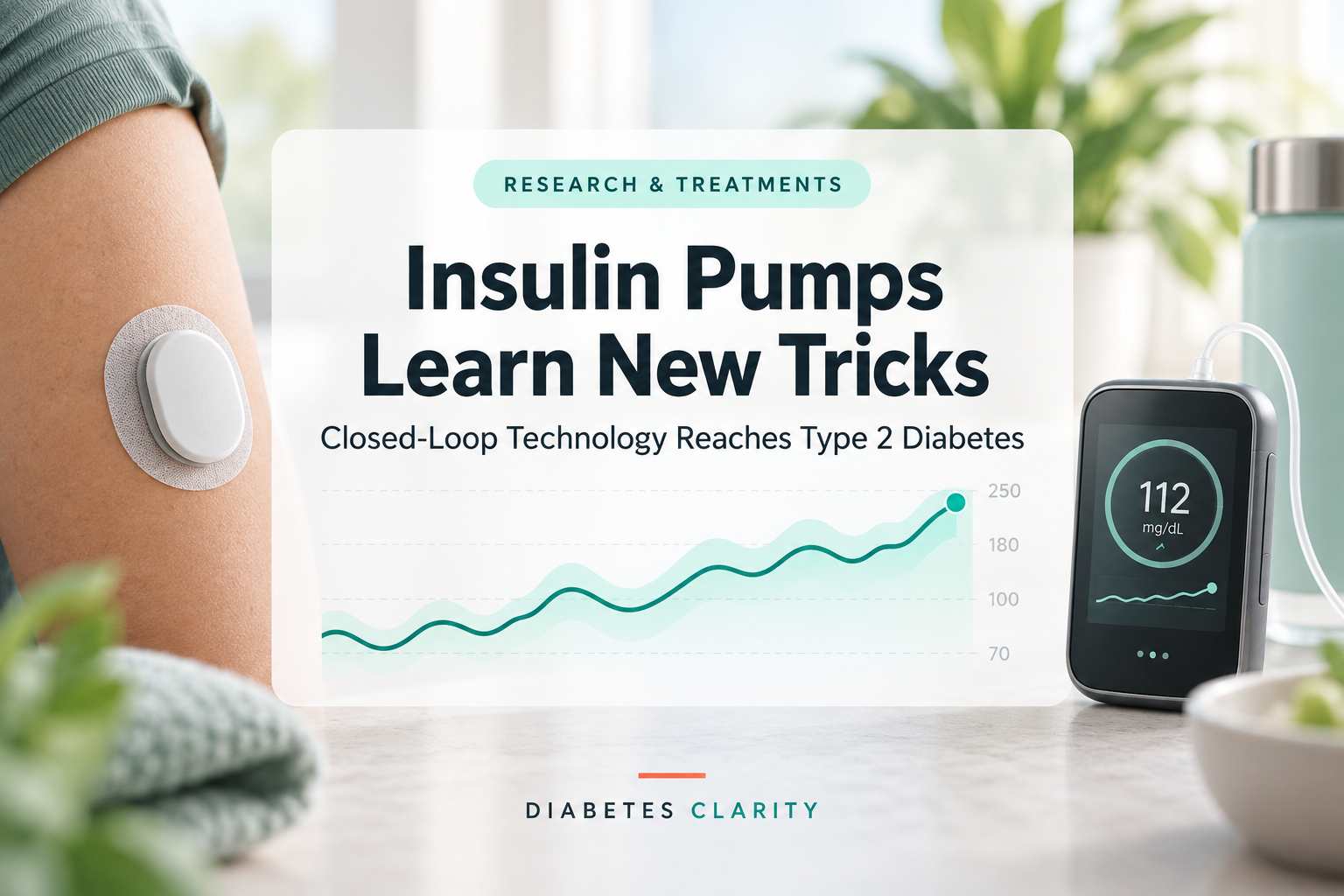
For years, automated insulin delivery (AID) systems — sometimes called “closed loop” systems or an “artificial pancreas” — have mostly been built for people with type 1 diabetes. That’s changing. In the United States, a closed-loop system called twiist has just been cleared for adults with insulin-treated type 2 diabetes, and researchers around the world are working on making these systems need even less input from the user. Here’s what’s new, what it means, and what’s still a way off.
The short version
- The US Food and Drug Administration (FDA) cleared the twiist Automated Insulin Delivery System on 16 October 2026 for adults with insulin-treated type 2 diabetes — a first for this type of device in that group.
- In a 13-week trial of 307 adults, average HbA1c (a blood test showing average blood glucose over about three months) dropped by 0.7 percentage points, and time spent in the healthy glucose range rose from 57% to 73%.
- Researchers are also testing systems that need less manual input, such as a US trial exploring whether a closed-loop algorithm can adjust insulin around “unannounced” meals, without the person having to count and enter carbohydrates.
- This device is not yet available in Australia. Closed-loop systems already approved and subsidised here remain focused mainly on type 1 diabetes.
What’s actually new
An automated insulin delivery system pairs a continuous glucose monitor (CGM) — a small sensor worn on the skin that checks glucose levels every few minutes — with an insulin pump and a smart algorithm. The algorithm reads the CGM data and automatically increases, decreases, or pauses insulin delivery, rather than the person having to manually adjust doses throughout the day.
Until now, these systems in both the US and Australia have mainly been approved for type 1 diabetes, where the body makes little or no insulin of its own. The twiist system’s new clearance for type 2 diabetes is significant because it opens the door to this technology for a much larger group of people who use insulin but have a different underlying condition.
According to reporting on the clearance, the system updates insulin delivery roughly every five minutes based on glucose trends, holds a 300-unit insulin cassette that’s changed about every three days, and includes technology designed to directly check that insulin is actually being delivered — aiming to pick up blockages or delivery problems faster than some other systems.
What the evidence shows
The clearance was supported by a 13-week single-arm study (meaning everyone in the trial used the device — there wasn’t a separate comparison group using something else) involving 307 adults with insulin-treated type 2 diabetes across 30 sites in the US.
Key results reported from that trial:
- Average HbA1c fell by about 0.7 percentage points overall.
- Time in the target glucose range increased from 57% to 73% — roughly an extra 3.8 hours a day with glucose levels in a healthy range.
- People who started with higher HbA1c levels (9% or above) saw bigger average improvements, around 2.1 percentage points.
These are promising results, but it’s worth remembering this was a short trial without a comparison group, run in a US population. Longer-term, real-world data — and local Australian studies — will help confirm how these results hold up over time and across different groups of people.
Who this affects
- Type 2 diabetes: This is the group most directly affected by the new US clearance. It applies specifically to adults with insulin-treated type 2 diabetes — not everyone with type 2 diabetes, and not people who manage their condition without insulin.
- Type 1 diabetes: Closed-loop systems already approved and subsidised in Australia continue to be the main option here, and ongoing research (including work supported by groups like Breakthrough T1D) is looking at making these systems smarter, including trials of insulin dosing that adjusts for meals without manual carbohydrate counting.
- Prediabetes and gestational diabetes: These device developments don’t currently apply to prediabetes or gestational diabetes, which are generally managed differently.
Availability in Australia
As of October 2026, the twiist system has only been cleared by the FDA for use in the United States. It has not been listed on the Therapeutic Goods Administration (TGA) register in Australia, and there is no current Pharmaceutical Benefits Scheme (PBS) or National Diabetes Services Scheme (NDSS) subsidy pathway for it here.
In Australia, closed-loop systems already available — such as those built around CGM and pump combinations — are mainly funded or subsidised for people with type 1 diabetes through existing NDSS and insulin pump subsidy arrangements. Diabetes Australia and others have previously called for expanded access to automated insulin delivery technology for more Australians who could benefit, but any extension to type 2 diabetes here would depend on separate TGA approval and government funding decisions, which take time.
What we still don’t know
- How these results translate to longer-term use, beyond the initial trial period.
- Whether and when a type 2 diabetes–specific closed-loop system might be assessed for use in Australia.
- How compatibility with different CGM brands might expand over time — at launch, the twiist system works with specific CGM sensors, not all brands.
- How residual issues like hypoglycaemia (low blood glucose) are managed even with automated systems — recent survey data on existing AID users with type 1 diabetes found a meaningful proportion still experience frequent low-glucose episodes, showing these systems help a lot but don’t remove the need for monitoring and support altogether.
What this means for you
- If you have type 2 diabetes and use insulin, this is a development worth knowing about, but it’s not yet something you can access in Australia — there’s no need to seek it out right now.
- If you have type 1 diabetes and already use or are considering a closed-loop system, keep talking with your endocrinologist or credentialled diabetes educator about which TGA-approved, NDSS-eligible option suits your needs.
- Ask your healthcare team about what’s currently funded and available to you, rather than relying on overseas news for treatment decisions.
- Don’t change your insulin regimen, pump settings or CGM use based on this article — always discuss any changes with your GP, endocrinologist or diabetes educator first.
- Keep an eye on reputable updates from Diabetes Australia and the TGA for news on if and when similar technology becomes available locally.
Automated insulin delivery is moving fast, and expanding it to more people with diabetes is genuinely exciting news. For more on living well with diabetes day to day, explore our daily menus, recipes and practical guides elsewhere on Diabetes Clarity.
📖 Sources:
• Medtech Dive – FDA clearance of Sequel Med Tech’s twiist system for type 2 diabetes – October 2026
• GlobeNewswire – Twiist Automated Insulin Delivery System cleared for adults with type 2 diabetes, trial results – October 2026
• Medscape – Coverage of twiist AID system clearance and clinical trial outcomes – October 2026
• Breakthrough T1D – Research update on Tidepool grant for unannounced-meal closed-loop trial and future AID roadmap – October 2026
• TGA (Therapeutic Goods Administration) – Device register and infusion pump listings, Australia – 2026
• PBS (Pharmaceutical Benefits Scheme) – PBAC September 2026 meeting outcomes – October 2026